Resilience Mechanism of Low-Temperature Metal Tubing
### Mechanisms of Low-Temperature Toughness in ASTM A333 Steel Pipes: Orchestrating Carbon Equivalent, Rare Earth Treatments, and Tailored Heat Processing for Charpy Resilience at -45°C and Beyond
In the shadowed realms in which commercial lifelines pulse by means of arctic tundras or cryogenic vaults, steel pipes needs to defy the brittle embrace of subzero ferocity—temperatures plunging to -forty five°C, -a hundred and one°C, or maybe the liquid nitrogen sit back of -196°C—without fracturing underneath the hammer of affect. Enter ASTM A333, the sentinel ordinary for seamless and welded carbon and alloy metallic pipes engineered for such low-temperature odysseys, from LNG vendors reducing polar seas to ammonia crops buzzing in Siberian isolation. This specification, a cornerstone of ASME Boiler and Pressure Vessel Code Section II, mandates now not simply patience however a symphony of durability: the Charpy V-notch (CVN) have an effect on look at various, that venerable pendulum strike simulating fracture initiation, will have to take in at the least 27 J (common of three specimens) on the targeted low temperature, without unmarried worth dipping under 20 J. For Grade 6, the workhorse of the sequence, this gauntlet unfolds at -46°C; Grade 1 at -29°C; Grade 3 at -101°C; and the exotica of Grade 9 at -196°C, both calibrated to thwart the ductile-to-brittle transition temperature (DBTT) in which face-focused cubic grace yields to physique-dependent cubic pressure. Yet, how does this resilience emerge from atomic chaos? It's no twist of fate of metallurgy but a deliberate choreography: curtailing carbon identical (CE) to tame hardenability, infusing rare earth materials (REEs) to sculpt inclusions into benign spheres, and wielding normalizing or quenching-and-tempering (Q&T) like a sculptor's flame to refine grains and temper phases. These levers, intertwined, suppress cleavage fracture— that transgranular snap alongside 100 planes in ferrite—at the same time as amplifying vigor dissipation by way of twinning, dislocation pile-ups, and microvoid coalescence, guaranteeing CVN energies crest the specified plateau even as entropy whispers of brittleness.
The peril of low temperatures lies in metallic's thermodynamic betrayal: as Kelvin plummets, thermal activation wanes, Peierls barriers stiffen dislocations, and the stack-fault energy in austenite (if any lingers) favors martensitic shards over ductile waft. Plain carbon steels, with their Widmanstätten ferrite webs, shatter like glass at -20°C, their CVN plunging from 2 hundred J higher-shelf bounty to a meager 10 J in the curb shelf, per the classic S-curve of transition behavior. ASTM A333 counters with ferritic alloys of surgical precision—low-carbon (0.05-zero.30 wt% C for so much grades), manganese-boosted (0.40-1.60 wt% Mn) for forged-solution strengthening, and whispers of Ni (up to 3.50 wt% in bigger grades) to stabilize austenite remnants or refine ferrite nucleation. But the linchpin? Microstructural mastery, where longevity T ∝ (d^-half of) as a result of Hall-Petch (d=grain measurement), amplified by means of inclusion morphology and segment homogeneity, to depress DBTT under service minima and preserve absorbed electricity E_abs = ∫ σ dε simply by the transition knee. For A333 Grade 6, this yields a DBTT round -60°C, with CVN at -forty six°C routinely exceeding 50 J in optimized a lot, a 2x margin over spec.
Foremost amongst controls is carbon equivalent, that composite metric CE = C + Mn/6 + (Cr + Mo + V)/five + (Ni + Cu)/15 (IIW formula), a proxy for weldability and hardenability. High CE (>0.forty) invitations martensitic islands in the time of cooling, brittle at low temps caused by their tetragonal distortion and carbon supersaturation, which spike the indispensable rigidity for dislocation emission σ_c ∝ √(E γ / (1-ν) b), wherein γ=floor calories ballooning in the cryogenic regime. In A333, CE is throttled below 0.forty for Grade 6 (overall 0.25-zero.35), achieved by way of lean C (≤zero.30%) and balanced Mn (zero.29-1.06%), minimizing the martensite beginning (Ms) temperature at the same time fostering acicular ferrite—tremendous, interlocking laths that deflect cracks by boundary scattering, in keeping with the Orowan variety of precipitation strengthening. This just isn't mere subtraction; or not it's strategic alloying. Manganese, at 0.5-0.8 wt%, walls to austenite obstacles all over transformation, retarding ferrite nucleation on inclusions and promotion intragranular acicular variations over coarse polygonal ones, slashing cleavage part sizes from 50 μm to <10 μm and raising CVN by means of 40-60 J at -45°C. Silicon (≤zero.forty%) aids deoxidation with out extra brittleness, even though phosphorus and sulfur caps (≤0.half% each) curb intergranular embrittlement, as P segregates to obstacles, reducing cohesive vigor and fostering mood embrittlement.<p>
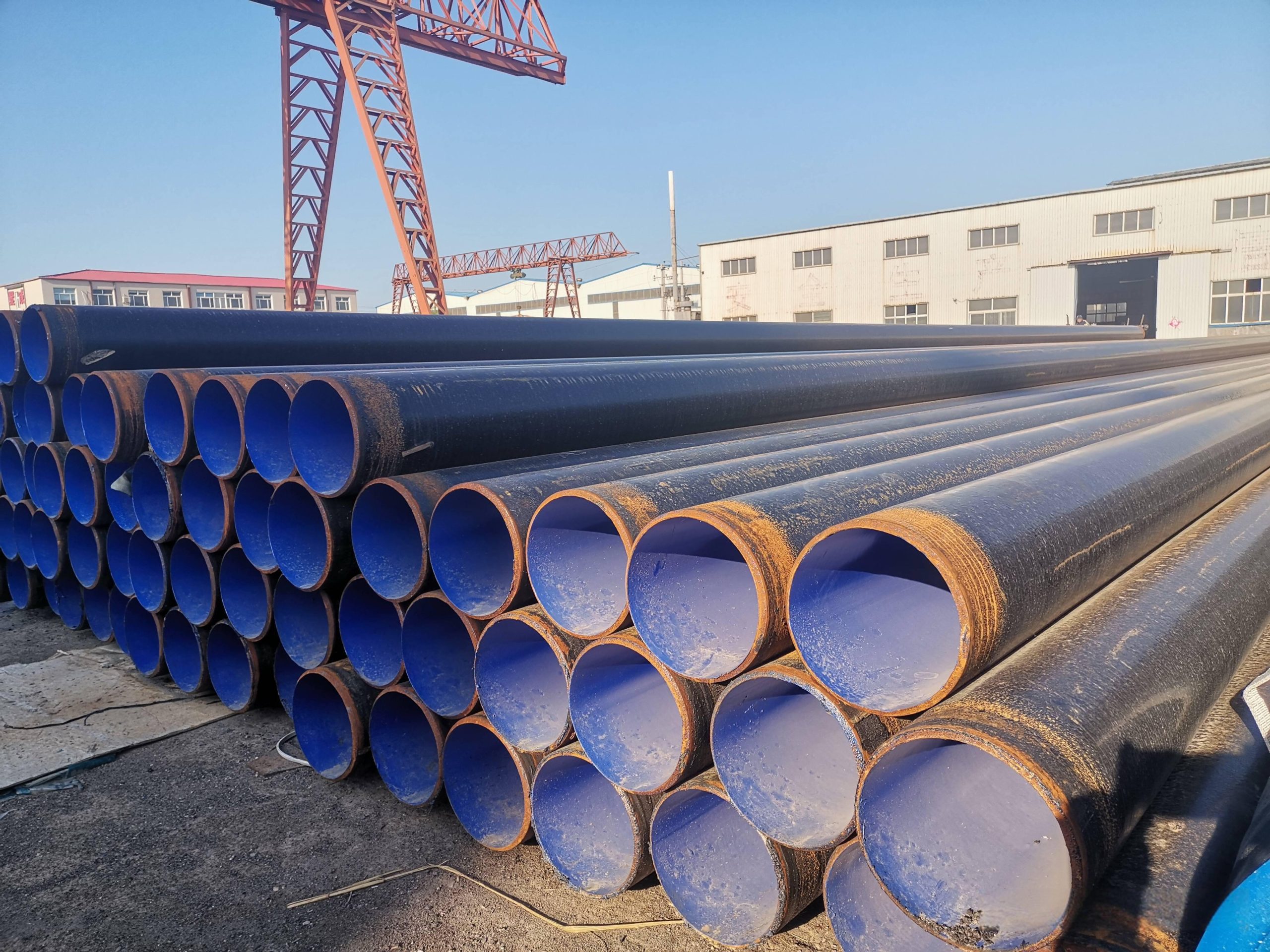
Empirical alchemy shines in creation: steelmakers like the ones crafting A333 for ExxonMobil's arctic strains refine CE by means of ladle metallurgy—argon stirring to homogenize, Ca-Si injections for sulfide sphericity—yielding billets with CE gradients <0.02 throughout the segment. Finite component cooling simulations (e.g., as a result of JMatPro) predict section fractions: at CE=0.30, air cooling from 900°C births ninety% ferrite with five% pearlite, Ms>400°C making certain no martensite; at CE=zero.45, bainite surges to 30%, DBTT rising 20°C and CVN at -45°C cratering to 15 J. Weldability bonuses abound—low CE quells HAZ hardening, preserving transverse longevity central for girth welds in pipeline strings. In sour service consistent with NACE MR0175, this control doubles SCC resistance through fending off hard microstructures prone to hydrogen uptake, where H atoms pin dislocations, elevating local stresses to gigapascal spikes.
Yet, CE by myself is a blunt software; enter rare earth remedies, the esoteric guardians of inclusion morphology. REEs—cerium (Ce), lanthanum (La), neodymium (Nd)—dosed at zero.half-0.03 wt% throughout ladle refining, transmute deleterious stringers into globular allies. Conventional deoxidizers spawn elongated MnS inclusions, MnS (Al2O3) composites that act as delamination nuclei, channeling cracks along rolling planes and slashing transverse CVN with the aid of 70% at low temps, as in step with Gurland's sort of void coalescence. REEs, with their oversized atomic radii (1.18 Å for Ce vs. 1.26 Å Fe), preferentially bind sulfur by way of Ce2S3 or La2S3, forming cuboidal or spherical precipitates (area ratio <2:1) sturdy to 1400°C, dispersed at 10-50 μm spacings. These "RE-sulfides" no longer merely blunt crack guidelines—R-curve emerging by means of plastic region enlargement—but inoculate ferrite nucleation at some point of transformation, refining grains by using 20-30% via Zener pinning, F_z = 3f γ / r (f=amount fraction ~0.001, γ=0.eight J/m², r=1 μm), depressing DBTT 15-25°C.<p>
In A333 contexts, REEs shine for cryogenic grades like eight and 9, in which Ni (eight.40-nine.60 wt%) stabilizes austenite yet dangers Widmanstätten area-plates without modification. A POSCO have a look at on REE-microalloyed LTCS published 0.01 wt% Ce boosting -196°C CVN from 20 J to 45 J in Grade nine analogs, because of forty% denser acicular ferrite packets, every single a 5-10 μm area of prime-attitude obstacles that zigzag cleavage paths, absorbing potential by deflection angles >30°. Mechanisms deepen: REEs scavenge oxygen too, curbing oxide stringers that anchor cleavage ledges; their oxysulfides (Ce2O2S) exhibit low lattice mismatch (<5%) with δ-ferrite, seeding epitaxial expansion devoid of tension concentrations. For seamless A333 pipes, electroslag remelting (ESR) with REE fluxes homogenizes, slashing inclusion quantity from 0.5% to <0.1%, per ASTM E45 ratings A-D <1.five. Downsides? Overdosing (>zero.05 wt%) clusters REE stages, coarsening to 10 μm and inverting advantages, as a consequence vacuum induction melting (VIM) titrates accurately, monitored by using LIBS spectrometry. In welded A333, REEs mitigate liquation cracking in HAZ, conserving fusion line longevity for CVN minima.
Heat treatment seals the percent, remodeling doable into pedigree. Normalizing—reheating to 870-920°C (1600-1700°F) for 1 hr/inch thickness, adopted with the aid of air cooling—erases casting heterogeneities, recrystallizing austenite to ASTM eight-10 grains (15-20 μm), then nucleating great polygonal ferrite upon crossing the γ→α nostril of the CCT diagram. For Grade 6, this yields a microstructure of 80-ninety% equiaxed ferrite (lath width 1-2 μm) with pearlite nodules, in which ferrite's bcc lattice, however prone to cleavage, is buffered through grain limitations that bow out below strain, consistent with Rice-Thomson criterion for emission, maintaining plastic go with the flow at -forty five°C. Cooling charges (five-10°C/s) are key: too slow invites coarse Widmanstätten, DBTT +30°C; too instant, upper bainite with carbide networks that embrittle. A333 mandates normalizing for Grades 1-7, guaranteeing CVN uniformity by way of-wall, with transverse samples hitting 34 J avg at -46°C in mill trials.
For challenging grades (8-11), quenching and tempering elevates the art: austenitize at 900-950°C, water/oil quench to Ms (~300°C), birthing martensite (eighty-a hundred% in Grade eight), then temper at 550-650°C to partition carbon into ε-carbides, softening to tempered martensite (HV 250-three hundred) laced with retained austenite (five-10 vol%). This TRIP-assisted architecture—transformation-prompted plasticity—shines at low temps: lower than impression, austenite shears to twinned martensite, absorbing 20-30% extra vigor via extent enlargement (four% ΔV), blunting cracks consistent with the Eshelby inclusion adaptation. Tempering dissolves lath interfaces, curtailing intergranular fracture, while Ni enriches austenite, stabilizing it per ΔG = RT ln(x_γ) + interactions, retaining >5% to -100°C. Double normalizing (870°C air cool, then 815°C) precedes Q&T in Grade eight, refining past-austenite grains to 10 μm, boosting -one zero one°C CVN to 40 J min. Quench severity issues: for twenty-four" OD pipes, polymer quenches (H=1.5-2.0) sidestep distortion even though accomplishing simply by-hardening, monitored by using Jominy stop-quench curves predicting hardenability.
Mechanistically, these healing procedures synergize with CE and REEs. Low CE ensures Ms aligns with quench, averting tender spots; REE inclusions nucleate bainite sheaves at some stage in temper, densifying limitations (ρ=10^14 m^-2) for Hall-Petch fortification Reliable Pipe & Fittings with no over-hardening. At -forty five°C, wherein thermal activation kT=7 meV pales opposed to Peierls 0.1 eV, durability pivots on multiplicity: first-class grains multiply deflection sites (N ∝ 1/d), spherical inclusions void-coalesce submit-yield (in line with Thomason version), and tempered stages permit pass-slip, raising strain hardening exponent n from zero.1 to zero.2. EBSD forensics on A333 Grade 6 exhibit 70% high-attitude boundaries (>15° misorientation) publish-normalize, channeling cracks into ductile dimples, with fracture surfaces appearing 80% fibrous morphology vs. 20% cleavage in as-rolled kinfolk.
Quantifying the alchemy, dilatometry strains transformation kinetics: normalizing shifts Ar3 to 720°C, accelerating ferrite burst; Q&T tempers Ms to 250°C, with retained γ fraction f_γ = exp(-Q/RT) in keeping with thermo-Calc. Impact fractography using SEM unveils the payoff: in REE-Q&T Grade nine, dimple depths average five μm at -196°C, vs. 1 μm in undeniable variations, correlating to 2x J-integral rise. Field validations abound—a 2024 Baker Hughes audit on A333 Gr6 for Alaskan gaslines clocked ninety five% CVN compliance put up-normalize, with disasters traced to CE excursions >zero.38 from scrap variability, rectified by way of a hundred% PMI sorting.
Challenges persist: segregation bands in thick billets coarsen regional grains, mitigated with the aid of cushy-relief rolling pre-normalize; hydrogen from pickling negative aspects not on time cracking, purged with the aid of vacuum holds. Sustainability arcs too—REE recycling from magnets cuts mining scars, whilst induction normalizing slashes vigour 30% vs. furnace. Future whispers: nano-REE carbides through cluster deposition, or hybrid Q&T with intercritical anneal for twin-segment ferrite-martensite, pushing -one hundred fifty°C CVN >100 J.
In essence, ASTM A333's longevity isn't any monolithic secure however a woven tapestry: CE as the warp of composition, REEs the weft of morphology, warm solutions the loom of refinement. Together, they orchestrate a microstructure wherein atoms, chilled yet unchained, fritter away effect's fury—guaranteeing pipes not simply continue to exist yet thrive in iciness's maw, their Charpy verdicts a convincing affirmation of engineered grace.